The Port of Antwerp (PoA) is the largest port of Belgium and the second largest in Europe. Thanks to its connection to the North Sea by the Western Scheldt, the Port is a major player in international trade. The associated company has over 1.600 workers who make sure the Port functions and grows. They manage and maintain docks, bridges, quay walls, and much more.
Challenge
Every 3 years, the PoA is ordered to perform an inspection of all the bridges in the port area. As these inspections were entirely manual, this required a lot of administrative work from the inspection team. A digitalisation of the process was in order.
Solution
Every 3 years, the PoA is ordered to perform an inspection of all the bridges in the port area. As these inspections were entirely manual, this required a lot of administrative work from the inspection team. A digitalisation of the process was in order.
Building bridges with technology
Every 3 years, the Belgian government orders Port of Antwerp to perform at least one inspection of all the bridges in the port area. This is necessary to guarantee that maintenance and repairs happen in time. As these inspections were still done on paper, the entire process really needed to be digitized. After the IT department of PoA did some digitalisation on their own, they suggested that a mobile app would complement their work perfectly.
From paper to iPad
Nowadays, the inspections are entirely manual. A boat, the inspection team with their photo cameras and …. pen and paper. However, this method is not impeccable, as it requires a lot of administrative work from the inspection team. That’s why we decided to develop an iPad application, which would make inspections more efficient, safer and faster.
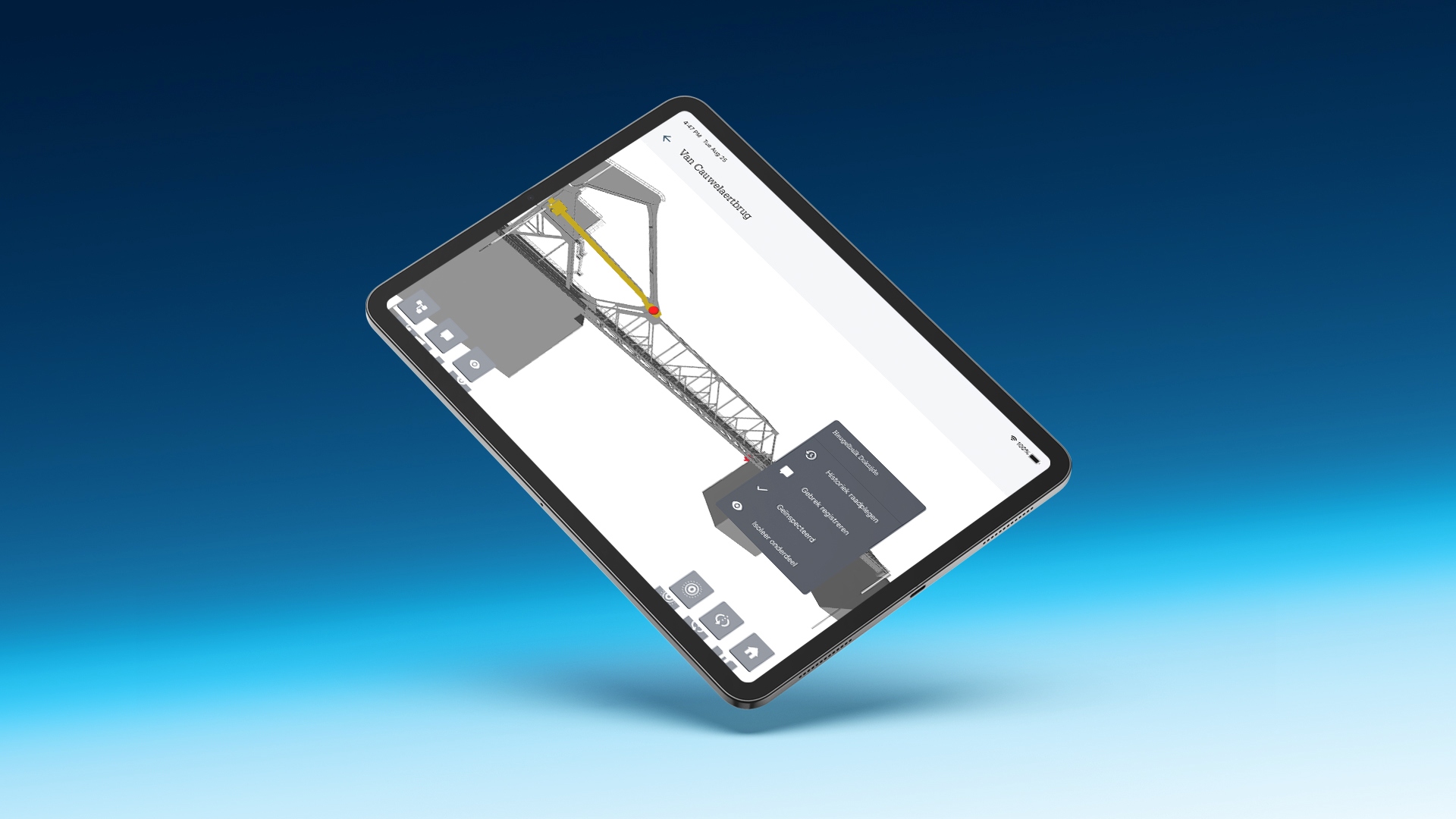
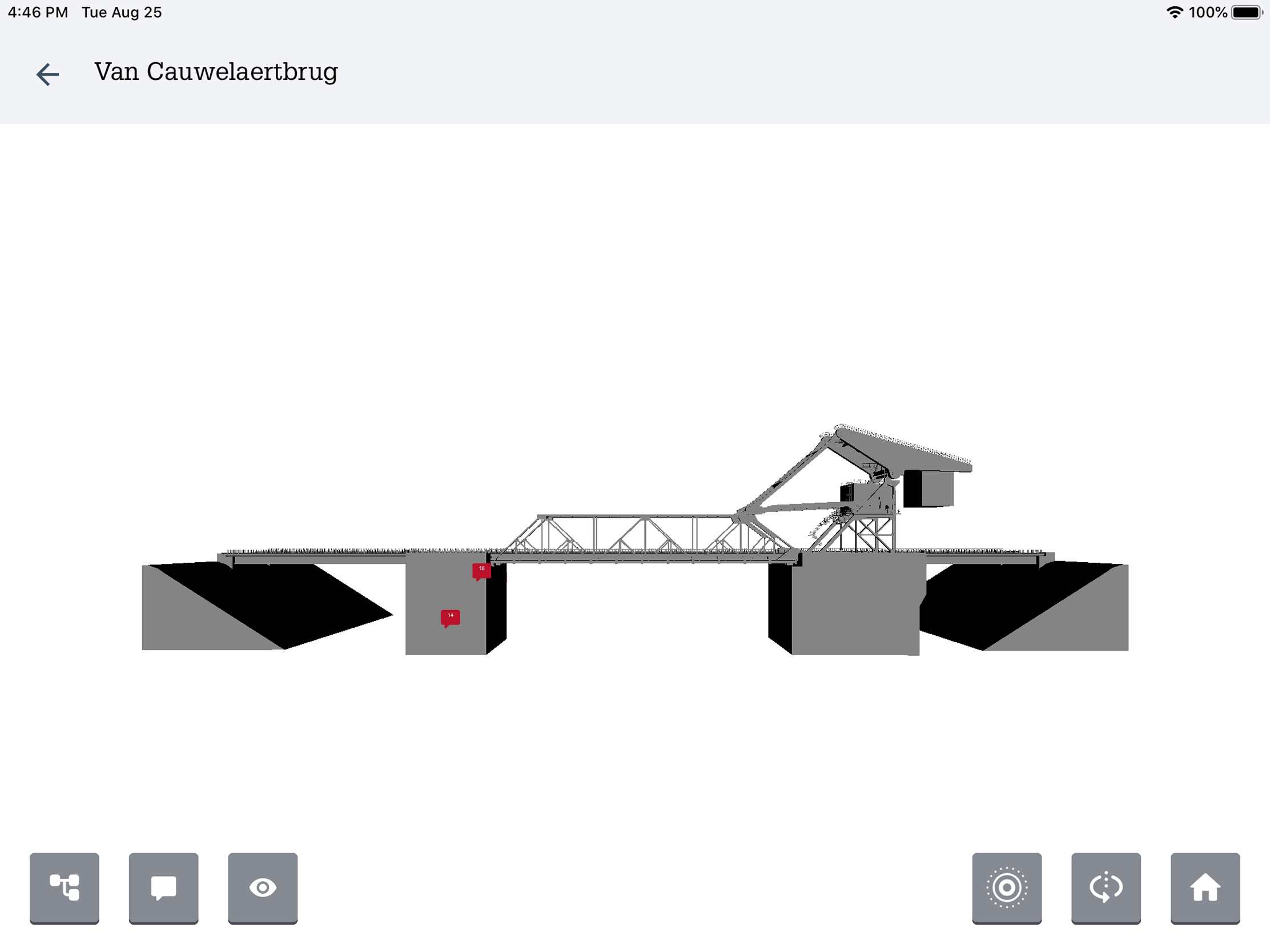
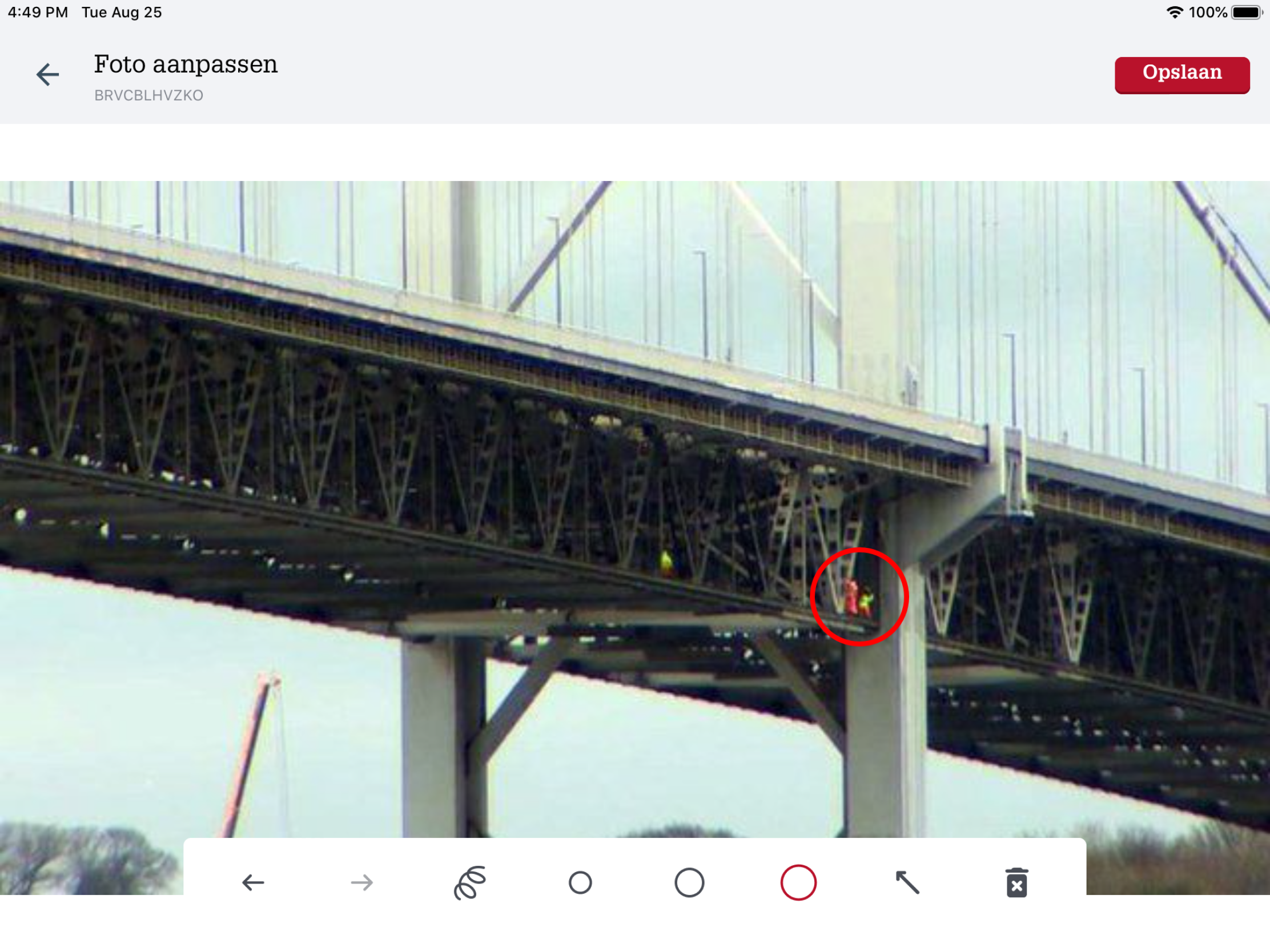
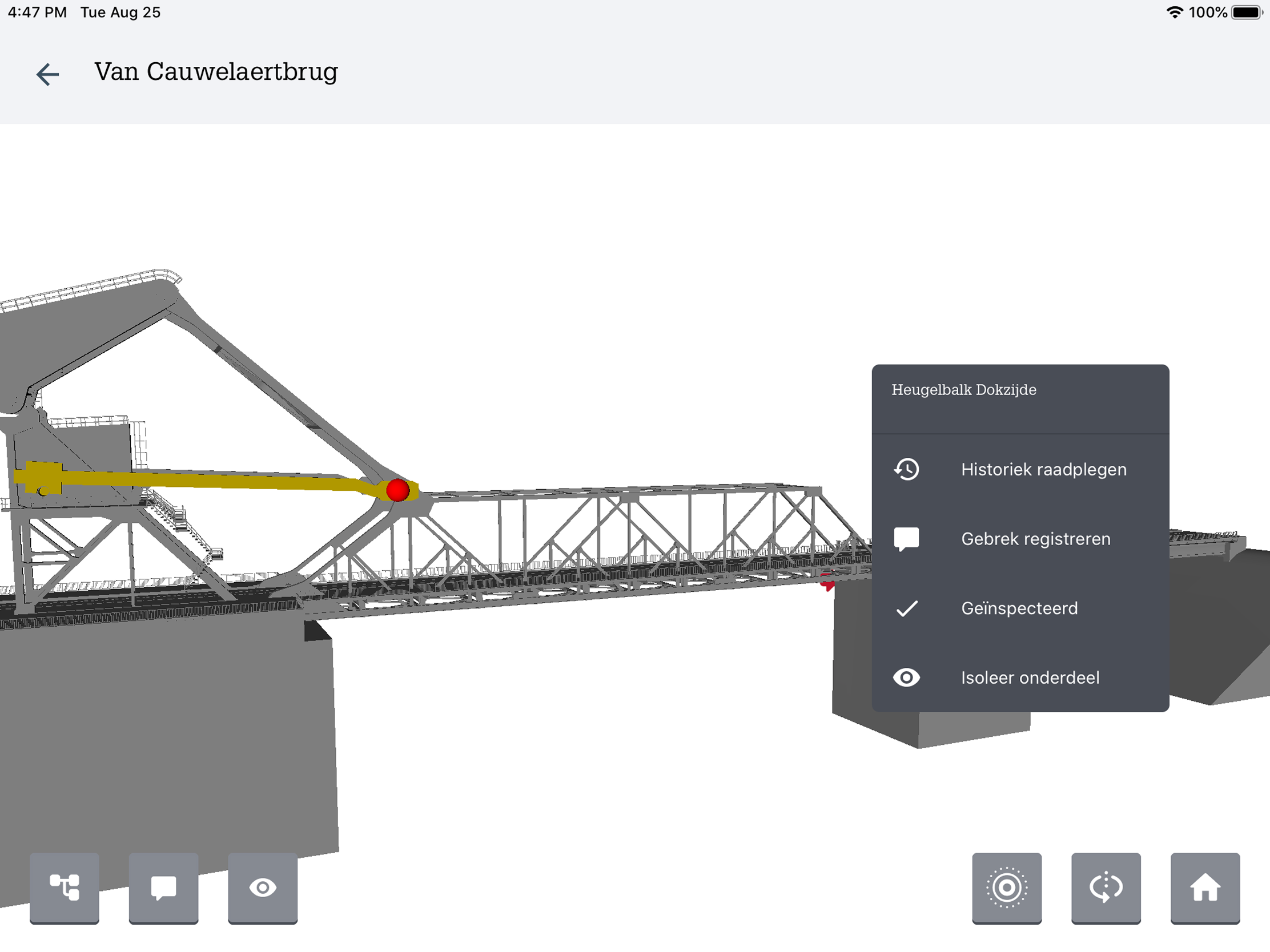
The app contains lifelike models of two of the bridges, which can be visualized in multiple ways, offering users a 360-degree view of the structure and making sure all details are visible. It’s our goal for the near future to create a 3D model of every bridge. Users should be able to view and inspect each 3D element separately. Deficits or inaccuracies are saved by adding comments to the model and by indicating where the issue occurs. Deficits are supported by photos, on which specific highlights can be drawn within the app.
Additionally, the app allows the inspector to assign a specific condition state to certain elements of the bridge in order to determine overall health score of the bridge.
Automatic synchronization
Once the information about the bridges is gathered, all data is synchronized with the existing web application of Port of Antwerp by means of an API call. This procedure happens automatically every two minutes, or manually after pressing the “synchronize” button.
The app continues working, even when it’s offline. If the internet connection is lost and something still needs to be synchronized, a fallback mechanism is set in motion to make sure no unsynchronized changes are getting lost. When the iPad app has transferred all information, the web application makes it possible to easily create a pdf of this report, which can be sent to the authorities.
To develop the app, we used Swift and Native iOS with SceneKit as a base. This is a high-level 3D graphics framework, developed by Apple, to help us create and visualise 3D animated scenes and effects. Besides the development of the app, we created the 3D designs of the bridges and bridge elements. Our 3D designer, Pieter Matthieu, calls this “the most fantastic part of the job. Because through 3D, you can really bring a design to life.” “...?”
Luckily for us, there are a lot of bridges left to transform into 3D versions. On to the next!